See where time goes
Our AI Organization Diagnostic maps what your team does, finds repetitive work, and identifies where valuable time is being lost.
- Current organization and function map
- AI opportunity assessment
- Prioritized 90-day roadmap
For boutique wineries, distributors, and restaurants
Your team should be focused on the work that needs their talent, judgment, and relationships—not repetitive tasks AI can take off their plates. We build an AI-enabled operating system that increases their capacity without increasing your headcount.
More capacity. Same team.
Use the talent you have
Give busywork to AI
Create capacity for more
Put your people where they add the most value
Your people know your customers, products, partners, and business. Their time belongs in decisions, relationships, sales, hospitality, and the moments that move the company forward—not in copying data, rewriting routine messages, assembling reports, or chasing the same follow-ups.
We redesign how the work gets done and use AI to handle the right lower-value tasks. Your existing team gains the room to take on more of the high-value work they do best.
What we build
We do more than recommend AI tools. We redesign the work, build the supporting workflows, and teach your team how to use the new system.
Our AI Organization Diagnostic maps what your team does, finds repetitive work, and identifies where valuable time is being lost.
Our AI Organization Build designs and implements a practical system that gives the right work to AI while your people retain ownership and control.
Through an ongoing AI Operations Partnership, we train your people and keep the system useful as the business changes.
The Edwards Operations method
Your team brings the talent. We create the operating model that gives them more room to use it. We stay from understanding the work through running the new system—so AI becomes useful capacity, not another tool to manage.
The metric that matters
Success is not the number of AI tools or agents installed. It is the useful capacity returned to your organization—and what your team can do with it.
The Human + AI Organization Chart
Same people. Same roles. Each person keeps the judgment, relationships and decisions only they can own, and gets AI support for the repetitive work that used to fill their week.
Human
Owner & General Manager
Keeps
AI support
Operations & Trade Assistant
Handles
Hospitality
Human · 3 people
Hospitality Manager + 2 Tasting Room Hosts
Keeps
AI support
Guest Coordinator
Wine Club & DTC
Human
Club & DTC Manager
Keeps
AI support
Club Assistant
Winemaking & Cellar
Human · 2 people
Winemaker + Cellar Lead
Keeps
AI support
Harvest Coordinator
Office & Compliance
Human
Operations Coordinator
Keeps
AI support
Admin Assistant
About 30 hours a week returned to the team. That's roughly three-quarters of a full-time hire, without adding one.
Your people spend that time on guests, members, trade relationships and the wine itself.
Illustrative example based on common patterns in boutique wineries. Every AI Organization Diagnostic builds this chart for your team, your roles and your numbers.
Get your free Capacity SnapshotWhat it looks like in practice
Every winery is different, but the same pressure points show up again and again. Here's what changes when the work has a clear system behind it.
Illustrative examples based on common patterns in boutique wineries, not specific client results.
Every tasting is by appointment, so each guest represents real effort and real opportunity. Reservations come in, confirmations and pre-visit questions pile up, and after the visit a guest who loved the Cabernet and asked about the club gets a generic thank-you, or nothing at all.
the hospitality, the guest relationships, and every offer, allocation and commitment.
A club release means allocations, member emails, shipping and pickup logistics, and a wave of member questions, all while the owner quietly becomes the project manager. Then harvest arrives, and delivery changes, vendor questions, lab follow-up and crew needs pile on top of the cellar work.
allocation decisions, final approvals, and complete control of winemaking, production and quality.
Where the time goes next: hospitality, trade relationships, and the growth projects that kept getting pushed to next quarter.
Every AI Organization Diagnostic ends with this picture drawn for your business: your tasks, your people, and where the capacity is hiding.
Get your free Capacity Snapshot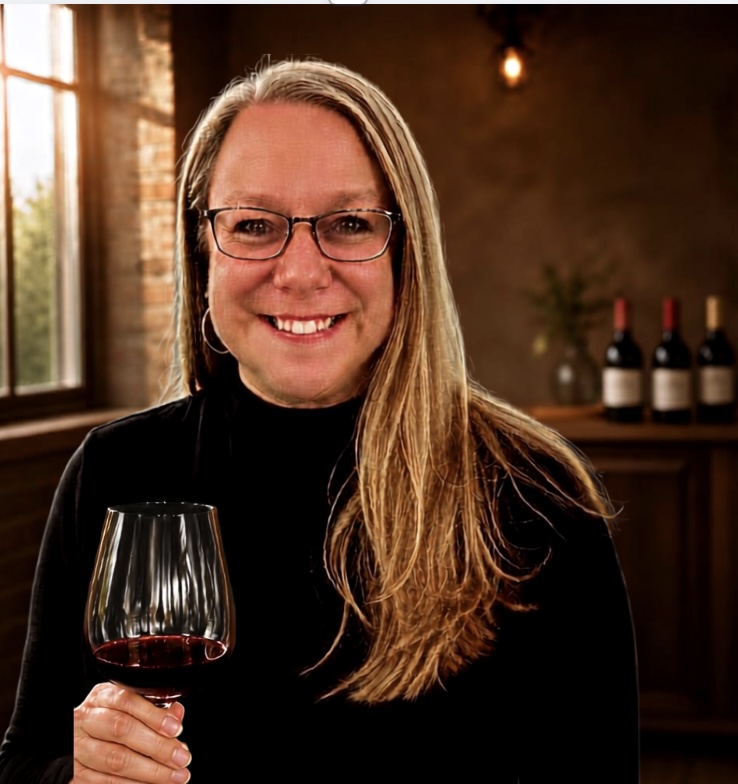
About Edwards Operations
Libby Edwards has spent more than two decades running hospitality businesses from the inside. As General Manager for Pappas Restaurants, she ran the floor and the kitchen, the team and the numbers. At Charles Krug Winery, she worked as Tasting Room Sales Lead and Manager. Most recently, she served as Director of Operations at Really Good Boxed Wine. She knows where teams lose time, where processes break down, and what one extra set of hands would mean on a busy day.
She has already built this for a winery. At Really Good Boxed Wine, a start-up winery with a lean team, Libby designed and ran the same kind of AI-enabled operating system Edwards Operations now builds for clients. She mapped the work, handed the repetitive tasks to AI and kept people in charge of the customers, decisions and relationships. The results were real: wine club membership grew while churn went down, and CRM and AI tools delivered a steady flow of leads to the wholesale team.
Edwards Operations starts with how your business actually runs, not with a piece of software. We combine organizational design, operations experience and practical AI so lean teams can take on more. Your people keep ownership of judgment, relationships, strategy and critical decisions.
FAQ
We focus on repetitive work that takes time away from your customers and business: assembling reports, drafting routine follow-ups, moving information between systems, and keeping internal handoffs on track.
For a winery, that might mean preparing wine club communications. For a distributor, compiling sales updates. For a restaurant, organizing daily operating reports. We start with where your team is losing time, then build practical workflows that use AI to help—with your people keeping oversight and control.
We work with boutique wineries, distributors, and restaurants where people wear multiple hats and repetitive administration competes with serving customers and growing the business. If your team spends too much time assembling information, chasing follow-ups, or repeating the same manual steps, there may be an opportunity to create more capacity. A conversation about your operation helps us identify where to start.
No AI expertise is needed. Your team brings the knowledge of how your business works; we bring operations expertise and practical AI implementation. We help identify useful applications, build the supporting workflows, and train your people to use them. Your team’s input helps us understand the work, test changes, and make sure the new approach fits everyday operations.
Not necessarily. We start by understanding your current tools and how information moves between them. The right approach depends on what those systems support and where the work gets stuck. That may mean improving an existing workflow, connecting tools, or considering a new tool where there is a clear need. Any proposed changes should serve your operation and be practical for your team to use.
We look at how repetitive a task is, what information it uses, and the consequences of getting it wrong. Routine preparation and administrative steps are often useful starting points. Your people retain ownership of judgment, relationships, strategy, and critical decisions. We design the workflow around that responsibility, including human review and approval where needed.
Data handling is part of designing the workflow. The information involved, who needs access, and the safeguards available in each tool all matter when deciding where AI belongs. The appropriate approach depends on your systems and requirements and should be agreed before implementation. You do not need to share sensitive records to begin a conversation; please keep passwords, payment details, and confidential customer information out of the website inquiry form.
We begin with a conversation about your operation and where repetitive work is taking up time. Our AI Organization Diagnostic maps responsibilities and workflows, identifies opportunities, and creates a prioritized 90-day roadmap. Your team helps explain the current process and provides feedback on proposed changes. The time commitment and implementation schedule depend on the scope, systems, and people involved; those details are discussed when planning the engagement.
Every engagement starts with a free 30-minute Capacity Snapshot, so you can see where the opportunities are before committing to anything. From there, the AI Organization Diagnostic is a fixed-fee engagement that maps your full operation and delivers a prioritized 90-day roadmap. Build and Partnership pricing depends on scope and on the systems involved, and we'll agree on it before any work begins. The ongoing partnership is optional.
Build capacity into your operation
In a 30-minute Capacity Snapshot call, we'll walk through a typical week in your operation together. You'll leave knowing the three places where your team is losing the most time to repetitive work, and what it would take to get that time back.
No AI experience needed. No software pitch. No obligation.
Book your free Capacity SnapshotPrefer to send a message? Use the form below.